
Uncanny Lives: Post-Classical Islamic Philosophers, Ascetic Practitioners, and an Interview with Poet, Jane Zwart
May 17, 2026

To seriously hold and inhabit two different logics in one’s mind is an act of profound intellectual and psychic maturity. Most of us dart like frightened rabbits from the uncanniness such an act requires: touching consciously with the mind Freud’s unheimlich, the Something that is strangely familiar yet simultaneously unsettling or disturbing.
The figure of twins has long evoked this uncanny feeling, which I have been pondering on this new Taurus moon in preparation for Gemini season: Castor and Pollux, the twin half-brothers who became the two brightest stars in the constellation. Twins remind us of polarity, that there are two when we would be far more comfortable with one. As a woman, I can easily imagine how a new mother’s mind might reel upon discovering only at birth that, rather than the one child she was expecting, she has brought forth two.
Depending on the culture, twins are connected to some of the most auspicious and positive spiritual beliefs and the most ominous and disturbing. But the common thread that links the seemingly opposite views of their birth and existence across peoples and time is the idea that, whatever twins are, they are something both like and unlike other people.
Perhaps this is why the life of the philosopher, the ascetic, and the poet feels uncanny to most and why they are among those who contribute to human history and meaning.
“In my view, what happened in the post-classical Islamic tradition is this: the key thinkers of that culture realized that a number of questions, which earlier philosophers in the same tradition were very adamant about, could not, in fact, be philosophically solved in the sense of proven,” says Frank Griffel, the Professor in the Study of Abrahamic Religions at the Faculty of Theology and Religion at Oxford University and Fellow at Lady Margaret Hall.
This key remark is from Part Two of our forum on his book, The Formation of Post-Classical Philosophy in Islam (Oxford University Press), which is featured in this issue. Griffel continues with this essential point:
“Certain genres of literature emerge that defend a certain set of teachings, which are counter to another genre of literary discourse that defend the opposite view. The really interesting thing—which I try to show in my book, and this is where I received the most significant pushback—is that I think an author could write books in discourse A and books in discourse B. […] There are other authors—Maimonides, for instance—who try to use both approaches in one book. And this creates a philosophical literature that, on the surface level, is very hard to understand.”
One can imagine a frustrated interlocutor asking the philosopher, “Yes, but what do you think.” And the philosopher says, “I think both.” This is not, of course, what the interlocutor wishes to hear because the question implies, Whose side are you on? What label do you wear?
The forum on The Formation of Post-Classical Philosophy in Islam is moderated by Marginalia’s Editor-in-Chief, philosopher and scholar of religion and Samuel Loncar, and it includes two specialists in the history of medieval Arabic and Jewish philosophy: Peter Adamson and Carlos Fraenkel.
Professor Adamson is the Chair of Late Ancient and Arabic Philosophy at the Ludwig-Maximilians-University in Munich. He is also the author of a very influential Oxford book series, A History of Philosophy Without Any Gaps, which is based on the eponymous podcast, which has reached hundreds of thousands of listeners. Professor Fraenkel is the James McGill Professor at McGill University, with a joint department in Jewish Studies and Philosophy, and the author of Philosophical Religions from Plato to Spinoza: Reason, Religion, and Autonomy (Cambridge University Press) and the prize-wining book, Teaching Plato in Palestine: Philosophy in a Divided World (Princeton University Press).
And divides that feel too wide to cross might be smaller than we first think. In “Why We Torture Ourselves: Ice-baths, Fasting, and the Allure of Discomfort,” an essay on the unexpected connections between Jewish ascetic practices, T.E. Lawrence, and modern self-inflicted forms of pain, Marginalia’s Senior Editor, Yonah Lavery-Yisraeli also references Maimonides and shows us how to see two points of view about self-mortification through a story from Sefer Hasidim.
Most of us, I suspect, do not fancy rolling naked in the snow or lying on nests of biting insects. In fact, our modern secular self-understanding may even scoff at such so-called medieval religious practices, but Lavery-Yisraeli shows us why we should not write off the ascetic as someone totally other than ourselves, and she helps us see where a conscious interaction with pain can take us.
And while the life of the poet may feel less alien than that of the hair-shirted individual whipping themselves, poets have long held a place in culture that is different than most.
In her interview with Marginalia’s George Steiner Editor for Poetry and Criticism, Amit Majmudar, poet Jane Zwart discusses her life as a poet. She shares the ups and downs of publishing and the joys of “making friends in line,” the cheering on of your fellow-poets while waiting for your own publications. To my great delight, she talks about muttering, which, I can tell you, non-poets and writers think of as suspect behavior. “If I drive without any noise in the car, sometimes I can mutter myself into a first line,” writes Zwart, “my husband tells me I mutter all the way through once I start writing.”
We are all muttering our way into the next line of life, though most spend considerable effort making sure no one notices. Perhaps the world would be a more poetic, beautiful, and sane place if we all went around muttering consciously. Our psychic stability and maturity, I believe, depends on integrating the uncanny behavior, the opposite logos, the different point of view.
Gemini season is an astrological reminder of our own internal twinning, the dialectic between our conscious and unconscious that compels us to interrogate false forms of unity, the single perspective we hold with a death-grip because it preserves a sense of self and the world we refuse to let go.
To genuinely inhabit both sides whets the intellect and cultivates humility before ultimate mysteries, like whether or not the cosmos is eternal or God has free will. The tension we feel thinking between the poles shines light into dark places, and it brings us to greater clarity and coherence.
May all things luminous be yours,
Alex
Marginalia Review of Books
Editor-in-Chief, Samuel Loncar, Ph.D. (Yale University)
Executive Editor, Alexandra Barylski, M.A. (Yale University)
The Post-Classical Turn: How Islamic Thought Reinvented Itself After the Philosophers’ Crisis
Frank Griffel’s book, The Formation of Post-Classical Philosophy in Islam (Oxford University Press), is part of a revolution taking place in Islamic scholarship, and it contributes to wider debates and conversations around the history of philosophy in the East and West, the questions that philosophy can meaningfully answer, and whether philosophy as a way of life, a living tradition, remains possible today.
The forum will be released in four parts before the final publication of the entire conversation, which will be available as a free digital book at Marginalia. This issue features Part Two, “The Post-Classical Turn: How Islamic Thought Reinvented Itself After the Philosophers’ Crisis,” which includes the last two paragraphs of Part One, “Did al-Ghazālī End Islamic Philosophy: An Oxford Professors’ Revisionist Perspective.

Carlos Fraenkel, James McGill Professor at McGill University, with a joint department in Jewish Studies and Philosophy:
“There is a kind of fundamental practice that has not changed from the beginning of philosophy to the present. And medieval Islamic philosophers, and philosophers in the Indian tradition, and so on, they all contribute to that practice…I came of age at a time when identity questions started to become pressing, and I was never able to sort out my own identity. I was too Jewish for Germany. I was too German for Brazil. I was not Jewish enough for Israel…So I was excited to discover philosophy as an alternative, cosmopolitan identity where we are all united by the pursuit of the truth, and it does not matter if you are Jewish or Christian, German or Brazilian, queer or straight, black or white, man or woman. As long as you have a passion to discover the truth, then you are in the club. It is a very inclusive club in that sense. But I have come to wonder if that story really holds. . .”
Poems as Children of the Moment: Jane Zwart Interviewed by Amit Majmudar
Jane Zwart teaches literature and writing at Calvin University, where she also co-directs the Calvin Center for Faith & Writing. Her personal, contemplative poems have been appearing widely for years in publications like Poetry, Ploughshares, and Threepenny Review. Her debut volume, Oddest & Oldest & Saddest & Best, appeared with Orison Books February 2026. This is an interview with Amit Majmudar, Marginalia’s George Steiner Editor for Poetry and Criticism in which they discuss her new book, poetry, and the life of poets.
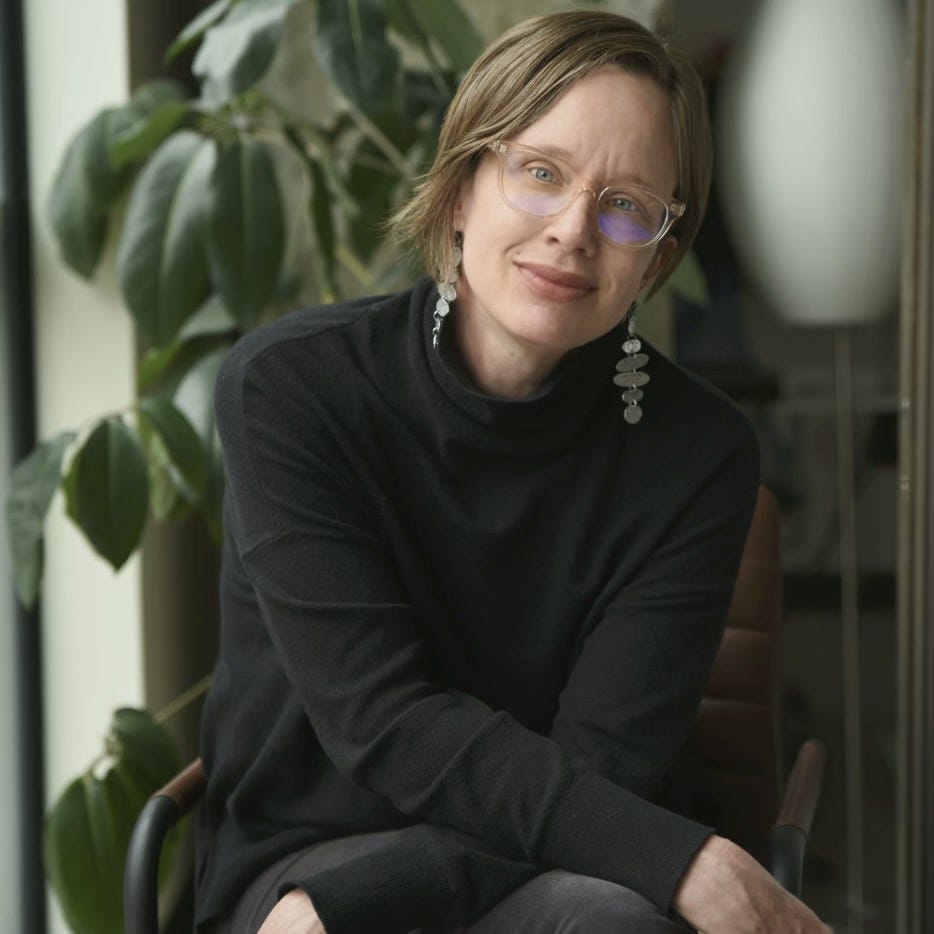
Jane Zwart, poet, teacher, and co-director the Calvin Center for Faith & Writing :
“Sometimes I find myself unable to write poems because I’m not in the right rooms in my mind.
The right rooms are quiet; that’s part of it. Or, when they’re not quiet, the acoustics suit the kind of echoes that poems run on (of other writers’ voices, of music, of memory). In those rooms, the play you’re talking about, the gambling with language, is possible.”
Why Do We Torture Ourselves? Ice-baths, Fasting, and the Allure of Discomfort
What if ice-baths, fasting, and other self-imposed deprivations are less about physical optimization and more about our mind? In this essay, Rabbi Yonah Lavery-Yisraeli reflects on our contemporary, secular forms of self-inflicted discomfort, the group most heavily associated with spiritually-motivated asceticism in Judaism, Hasidei Ashkenaz, and T.E. Lawrence’s thoughts on pain and psychological freedom in his memior, the Seven Pillars of Wisdom.
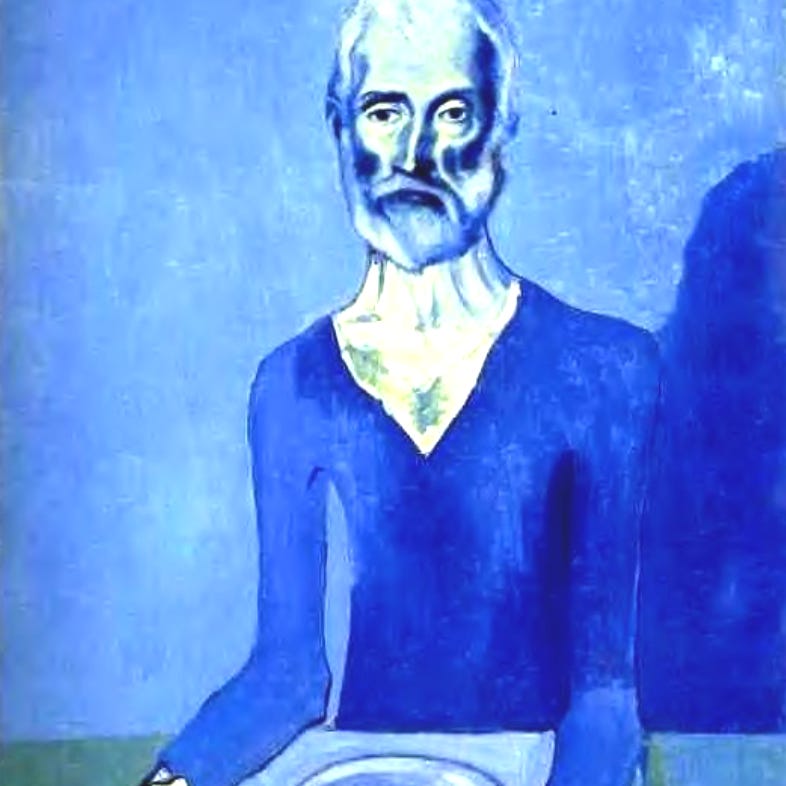
Yonah Lavery-Yisraeli, writer, rabbi, and Senior Editor at Marginalia:
“Like the modern skeptic, Rambam (more widely known as Maimonides) is wary of trends and is alive to the slipperiness of motivation. In his work Shemoneh Peraqim, he raises the spectres of misunderstanding and superficiality, and argues that there are, in fact, right and wrong reasons to engage in discomfort.”
JOIN US on OUR MISSION
Since 2017, Marginalia has advocated for and realized an integrated, unified, and holistic approach to knowledge.
Our articles have been read and assigned by Google employees, White House staffers, and members of the European Parliament, and they appear on syllabi in universities and classrooms around the world.
Curated by scholars, poets, philosophers, and scientists, we integrate knowledge and meaning for the public good and provide depth for the digital age. As a charitable organization and magazine for the public good, we serve over 150,000 global readers.
No paywall, no exclusivity: just rigorous ideas and powerful insights available to everyone thanks to readers like you who support our pages.
Become a paying subscriber today to comment in the community and receive supporter-only invitations to live workshops and events online and in a major cities.